
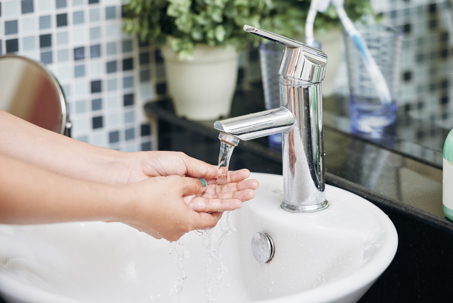
Every time you scrub spots off your Frisco shower glass or peel chalky buildup off a faucet, you are seeing your hard water at work. The same minerals that leave a white ring around your fixtures are moving through every pipe, valve, and appliance in your home. Over time, they do much more than make cleaning harder, they change how your plumbing and equipment perform.
In North Texas, including communities like Frisco, hard water is simply part of daily life. Many homeowners treat cloudy dishes, stiff towels, or scaly showerheads as annoyances they just have to live with. What most people do not see is how that same hard water quietly shortens the life of water heaters, dishwashers, and washing machines and can lead to more frequent service calls and higher energy use.
At Blue Star Plumbing LLC, we work with homes across Wylie and Northeast Dallas that deal with similar water conditions, and we see the inside of scaled-up water heaters and fixtures every week. Our licensed plumbers spend a lot of time not only fixing the damage hard water causes, but also installing water softeners that help prevent those problems from getting worse. In this guide, we will walk through how hard water affects Frisco homes, how softeners work, and how to decide if investing in a system makes sense for your family.
Why Frisco Homes Struggle With Hard Water
Hard water simply means water with higher amounts of dissolved minerals, mainly calcium and magnesium. In practice, that shows up as white crust around faucet bases, spots on glassware, a filmy feeling on shower walls, and soap that never seems to rinse clean. If you live in or around Frisco, you probably see at least a few of those signs on a regular basis.
Municipal water supplies in North Texas often fall in the moderately hard to very hard range. That is partly due to the geology the water travels through before treatment, which leaves it with more dissolved mineral content. Those minerals are not usually dangerous in the way some contaminants are, but they are very stubborn. When hard water gets heated or evaporates, it leaves those minerals behind as scale on the surfaces it touches.
What you can see on your fixtures is only part of the story. The same crust that forms around a faucet base is also forming inside the faucet body and on the cartridges that control flow and temperature. It coats the inside of showerheads, clogs tiny jets in dishwasher arms, and settles on the bottom of your water heater tank. When we are called out to homes in hard water areas, we often find that “low pressure” or “worn out” fixtures are simply packed with mineral buildup.
Because Blue Star Plumbing LLC serves many communities around Northeast Dallas with similar water, we have a good feel for how normal this is for the region. The key is recognizing that these are not random one-off problems. They are patterns that come from the same source, your hard water, and that can be addressed in a consistent way instead of fighting each symptom one at a time.
How Hard Water Wears Down Your Plumbing & Appliances
Inside your water heater, hard water does its quiet work every day. As the water heats, minerals fall out of solution and settle on the bottom of the tank or bind to the heating elements. Over time, that layer of scale acts like an insulating blanket, forcing the heater to work harder to warm the same amount of water. Homeowners may notice longer wait times for hot water, rumbling or popping noises, or rising energy bills as the heater struggles.
The same process affects other appliances. In dishwashers, mineral deposits can clog spray arms and filters, which leads to poor cleaning performance and cloudy dishes even when you use more detergent. Washing machines can develop buildup on internal parts, and valves that feed these appliances can stick or leak because scale interferes with their moving components. In fixtures, cartridges that should glide smoothly can become stiff or seize entirely, which is why some faucets and shower valves fail much earlier in hard water homes.
All of this adds up to a pattern of more frequent repairs and replacements. We regularly see water heaters in hard water areas needing replacement earlier than their expected service life because of sediment and scale damage. Homeowners often blame the brand or assume they got a “bad unit,” but when we open the tank and see heavy mineral buildup, the real culprit is clear. The same goes for showerheads and faucets that have to be replaced again and again because they are plugged with scale inside.
There is also a comfort and cleanliness cost. Scale reduces the internal diameter of pipes and fittings, which can contribute to reduced flow at fixtures over time. Soap and shampoo react with hardness minerals to form soap scum, so you use more product and spend more time cleaning yet still feel a residue on skin, hair, and surfaces. When you add up the extra energy the water heater uses, the cleaning products, and the shortened life of fixtures and appliances, hard water becomes an expensive problem rather than a small nuisance.
Because we see this pattern repeat in homes throughout our service area, our team at Blue Star Plumbing LLC often talks with homeowners about not only fixing immediate issues, but also taking steps to reduce how aggressively hard water attacks their plumbing. That is where water softeners come into the picture.
How Water Softeners Work to Protect Your Home
A traditional salt-based water softener is designed to pull hardness minerals out of the water before they move through your home’s plumbing. The main part of the system is a tank filled with tiny resin beads. As hard water flows through this tank, those beads grab onto calcium and magnesium ions and release a much smaller amount of sodium ions in their place. This process, called ion exchange, is what softens the water.
Over time, the resin beads become loaded with hardness minerals and need to be cleaned so they can keep doing their job. That is where the second tank, the brine tank, comes in. The brine tank holds a concentrated salt solution. During a regeneration cycle, the softener takes itself briefly offline, draws brine into the resin tank, and flushes it through the beads. The high concentration of sodium in the brine knocks the hardness minerals off the resin and carries them out to a drain.
The entire process is automatic once it is set up correctly. The system is plumbed into the main water line where it enters the home, often near the water heater or in a garage or utility room. Most of the home’s interior water supply, such as showers, laundry, and hot water, is routed through the softener. Certain lines, like outdoor hose bibs and sometimes the cold line to the kitchen sink, are often left on hard water so you are not using softened water for irrigation and so you have a hard water tap available if you prefer it for drinking.
It is important to understand what a softener does and what it does not do. A softener removes hardness minerals, which addresses scale, soap scum, and many of the problems described earlier. It does not remove every type of contaminant or particle the way a full filtration system might. That distinction matters when you are comparing different water treatment options that may be marketed together but solve different problems.
Everyday Benefits Frisco Homeowners Notice With Soft Water
Once a softener is up and running, many homeowners notice day-to-day changes quickly. Glass shower doors stay clearer longer, soap scum on tile is reduced, and fixtures do not develop the same heavy white crust around the base or on the spout. That means less time scrubbing and fewer harsh cleaners, which is usually one of the first benefits people mention after a few weeks with softer water.
Laundry and bathing are other areas where the difference shows. Without hardness minerals reacting with soap, detergents work more effectively, and many families find they can use less product to get the same or better results. Towels and clothes typically feel softer and less scratchy after washing in softened water. In the shower, soap and shampoo lather more easily and rinse off more completely, which often leaves skin and hair feeling less dried out for some people.
There are also quieter benefits that do not show up in a single day, but become clear over time. Reduced scale inside water heaters helps them maintain performance more consistently over their lifespan. Fixtures such as faucets and shower valves tend to operate more smoothly, since their internal parts are not constantly being coated with new mineral deposits. Appliances like dishwashers and washing machines are less likely to suffer from clogged jets and valves caused by hardened scale.
When we install water softeners for homeowners in our service area, our team at Blue Star Plumbing LLC takes time to explain these changes and what to expect in the first few weeks. We walk through how to check the brine tank, how to use the bypass if needed, and what visual signs to watch as the old hard water residue gradually stops building up. That customer-first communication helps families feel comfortable with the system and confident they are seeing the benefits they invested in.
Considering a Water Softener for Your Frisco Home?
Living with hard water in a Frisco-area home does not have to mean constant scrubbing, recurring fixture problems, and water heaters that fail before their time. A properly sized, professionally installed water softener can change the way your plumbing system ages and how your home feels day to day, especially in a region where hard water is the norm rather than the exception.
If you are seeing the signs of hard water and wondering whether a softener is worth it for your home, the next step is a straightforward one. Our team at Blue Star Plumbing LLC can test your water, look at your plumbing layout, discuss your household’s water use, and provide a clear, flat-rate quote along with financing options if you want them. We will explain your choices in plain language and help you decide what makes sense, without pressure.
Call (214) 800-4575 to talk with our team about water softener options for your North Texas home.